Your first latex piece: how to choose a starter garment that fits
A good first latex piece to buy is one simple garment with no fiddly closures, in a forgiving thicker gauge, from a maker who publishes a real size chart. Plain briefs, a basic top, a bralette or gloves all teach you how latex fits, dresses and cleans before you commit to a fitted outfit.
The best first latex piece is a simple one. A single well-fitting garment with no complicated closures teaches you how the material feels, how to dress into it, and how to care for it afterwards, all without the cost or frustration of a full outfit. Learn on something forgiving first, then spend with confidence later.
Start with one piece, not an outfit
It is tempting to buy the showstopper you saw in a photo. Resist it. A catsuit or a fitted dress asks you to already know how to dress into latex without tearing it, how to size a rigid material correctly, and how to clean and store it. Get those skills on a cheap, simple garment and the expensive pieces become easy. Rush them on your first buy and a costly item can pick up a tear or a poor fit you cannot undo.
Best starter shapes
A few shapes are genuinely beginner-friendly:
Gloves are cheap, teach you the slow finger-by-finger dressing method, and are hard to size wrong. Plain briefs or shorts are forgiving and simple to get on. A basic top, bralette or vest introduces a larger garment without fiddly zips. Stockings and simple sleeves are also gentle starters.
Avoid, for now, anything with long back zips, corset lacing, heavy detailing or a very thin gauge. Those are second-purchase territory.
Gauge, colour and fit

Gauge is the thickness of the rubber. For a first piece, choose a thicker gauge, around 0.40mm, because it is far more forgiving of clumsy dressing than gossamer-thin sheeting. The delicate stuff is beautiful, and it also tears if you catch it wrong while you are still learning.
Colour is up to you, though black hides minor marks and is the easiest to shine evenly. Bright and pale colours show fingerprints and any staining more readily.
Fit is where latex is unforgiving. It has almost no give, so a guess rarely works. Measure yourself with a soft tape, write the numbers down, and buy against the maker’s published size chart rather than a clothing dress size. If you fall between two sizes, size up. Our latex sizing guide walks through taking measurements properly.
What to check before you pay
Before you commit, check a few things. Does the seller publish a real size chart with body measurements, not just S, M and L? Do they say what gauge the garment is? Are the seams described as glued and finished neatly? Is there a clear returns or remake policy if the fit is off? A maker who answers these plainly is usually a safe bet. Our how to buy latex clothing guide covers vetting sellers and the custom versus off-the-peg decision.
One health check belongs here too. If you have ever reacted to rubber gloves or balloons, read the latex allergy guide and patch test before buying a larger garment.
Budget and where to buy
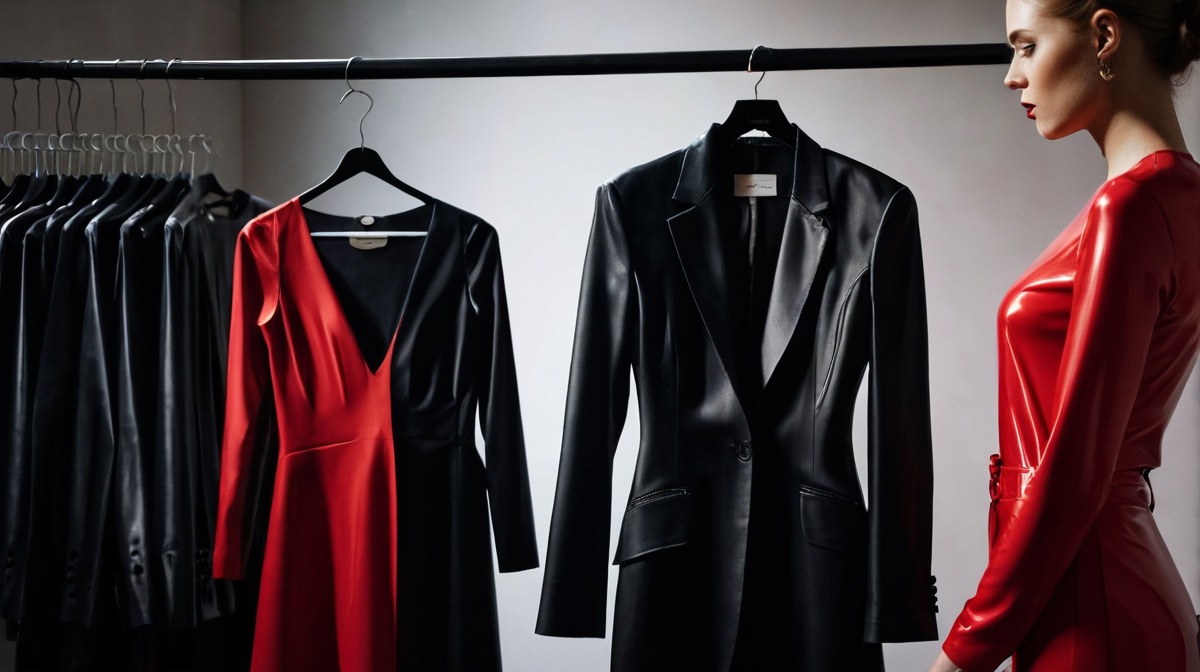
Latex spans a wide price range. A simple pair of gloves or briefs is inexpensive, while a fitted dress or catsuit from a good maker costs a fair bit more. For a first purchase, spend enough to get a decent gauge from a seller with a real size chart, but not so much that a learning mistake stings. A mid-range simple piece is the sweet spot.
Buy from a specialist latex maker or a reputable retailer rather than a generic marketplace listing with no measurements. Independent makers often offer the best quality and will happily answer questions about gauge, fit and finish before you order. Community recommendations are valuable here, since experienced members point you toward sellers who deliver and away from ones who disappoint. Whichever route you choose, read the returns policy before paying, because fit surprises are common with a first latex order.
After it arrives
When the parcel lands, do not rush straight into dressing. Read any care card, get a dressing aid ready, and set aside time for an unhurried first try, following how to put on latex. Take off your rings, use talc or silicone so it slides, and keep the first wear short and somewhere cool. Then wash and dry it properly before it goes away.
For choosing between two shortlisted pieces, or a second opinion on a maker, the beginners board is full of people who bought the same starter garments recently. A quick post there often saves a return.
Questions people ask
What is the best first latex piece to buy?
Something simple with no fiddly closures: gloves, plain briefs, a basic top or stockings. One easy garment teaches you how latex fits, dresses and cleans before you spend on a fitted outfit.
Should my first piece be custom or off-the-peg?
Off-the-peg is fine and cheaper for simple shapes. Save made-to-measure for fitted pieces later, once you know how latex behaves and how to take accurate measurements.
How much should I spend on a first latex garment?
Enough for a decent gauge from a maker with a real size chart, but not so much that a learning mistake hurts. A simple quality piece is a better teacher than an expensive, complicated one.
More on Getting started
Take it past the page
Guides get you the method. People get you the shortcuts: the shops worth the money, the fixes that actually hold, and the nights worth dressing up for. The Club is full of them.
Find your people →