Latex sizing guide: measure, read the chart and get the fit right
Because latex has almost no give, sizing depends on accurate body measurements matched to the maker's real size chart, not on your usual dress size. Measure bust, waist, hips and any relevant lengths with a soft tape over minimal clothing, compare against the specific brand's chart, and size up if you fall between two sizes.
Latex has almost no stretch in the way fabric does, so sizing is about matching your real body measurements to a maker’s chart, not your usual clothing size. Get a soft tape measure, take a few careful measurements, and compare them against the specific brand you are buying from. If you land between two sizes, size up. That one approach prevents most fit disappointments before they happen.
Why latex sizing is different
A cotton top forgives a rough guess because the fabric stretches and drapes. Latex does neither. It is a rigid sheet that either fits your body or does not, and a poor fit shows instantly because you cannot tug it into place. On top of that, sizing is not standard between makers. One brand’s medium is another’s small. This is why your dress size tells you very little, and why you measure every time.
Measurements to take
Take measurements over minimal or close-fitting clothing, standing relaxed, with the tape snug but not tight. The core three are bust or chest, natural waist, and hips at the fullest point. For fitted garments you may also need shoulder width, inside leg, arm length and neck. Write everything down in centimetres and inches so you can read any chart.
The neck is the one number where the chart is not the last word. Anything that closes around the throat, a latex collar included, wants two fingers of room between band and skin rather than the close fit you would ask for anywhere else on the body.
Measure twice and keep the numbers somewhere you can find them. A saved note of your measurements makes every future purchase faster and safer.
Reading a maker’s size chart
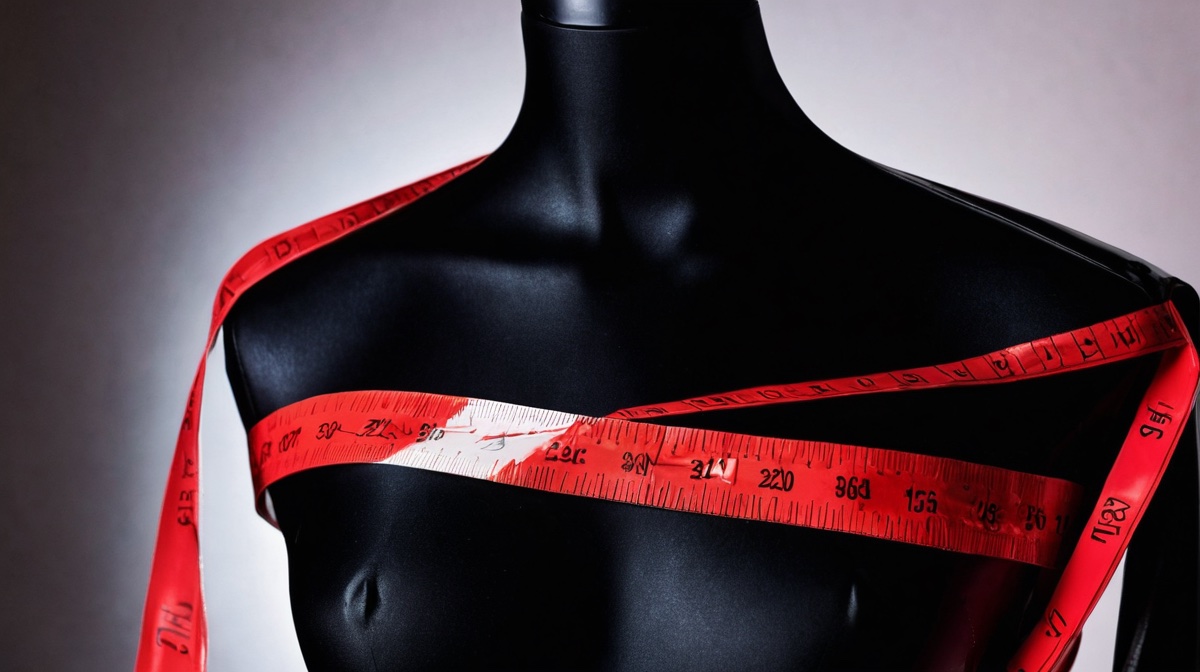
Only buy from a seller who publishes a real size chart with body measurements, not just S, M and L. Compare your numbers to the chart column by column, bust to bust, waist to waist, hips to hips.
Your body rarely matches one size across all three. When it does not, the safest rule for rigid latex is to size to the larger measurement, then consider made-to-measure if the mismatch is big. Sizing up gives you a garment you can get into. Sizing down gives you one you cannot. Check whether the chart lists flat or stretched measurements, and ask the maker if it is unclear.
Off-the-peg versus made-to-measure
Off-the-peg is fine for simple, forgiving shapes: gloves, stockings, briefs, basic tops. It is cheaper and quicker.
Made-to-measure comes into its own for fitted pieces like catsuits, dresses and anything meant to look sculpted. You send your measurements and the maker cuts to them, which is the surest route to a clean fit on any body. It costs more and takes longer, and for a statement garment it is usually money well spent. Our how to buy latex clothing guide covers choosing and briefing a maker.
Common sizing mistakes

A handful of errors cause most sizing regret. The first is buying by dress size instead of measuring, which almost guarantees a poor fit in a material with no give. The second is mixing charts, taking a size from one maker and assuming it carries to another. Always use the chart for the exact garment you are buying.
The third is measuring carelessly, with the tape too loose, too tight, or in the wrong place. Take your time, keep the tape level, and measure twice. The fourth is sizing down in the hope a piece will stretch to fit; rigid latex will not, and a too-small garment is difficult to get on and uncomfortable once on. When in doubt, size to your largest relevant measurement, or order made-to-measure so the maker cuts to your exact numbers. Keeping a written record of your measurements, updated if your body changes, prevents most of these mistakes in one step.
Fit checks and fixes
When a new piece arrives, try it on unhurried, using a dressing aid so you are testing the fit and not fighting the rubber, as shown in dressing aids for latex. It should feel snug and smooth without cutting in, restricting your breathing, or leaving gaping gaps. Some tightness is normal with latex; pain, pinching or numbness is not.
If the fit is off, contact the maker. A good one will discuss a remake or exchange, especially on a custom order. To sanity-check your measurements before ordering, or to compare a brand’s chart against real experiences, ask in the beginners board or the wider Club. For choosing shapes that suit your frame, pair this with latex for your body type.
Questions people ask
Should I size up or down in latex?
If you fall between two sizes, size up. Rigid latex has almost no give, so a slightly larger piece can be worn, while a too-small one cannot be tugged to fit.
Can I use my normal dress size for latex?
No. Latex sizing varies by maker and depends on body measurements, not dress size. Always measure and compare against the specific brand's size chart.
What measurements do I need to buy latex?
At minimum bust or chest, natural waist and hips. Fitted garments may also need shoulder width, arm length, inside leg and neck. Record them in both centimetres and inches.
More on Buying latex
Take it past the page
Guides get you the method. People get you the shortcuts: the shops worth the money, the fixes that actually hold, and the nights worth dressing up for. The Club is full of them.
Find your people →